
Safety profile
VYVGART®: engineered for high affinity to FcRn1

- Fc fragment of human IgG antibody
- Natural binding to FcRn receptor
- VYVGART® has no impact on IgM, IgA, IgD, IgE levels4,5 or IgG production2
- VYVGART® has no observed decrease in albumin and has no observed increase in LDL cholesterol2,5
Fc=crystallizable fragment; FcRn=neonatal Fc receptor; IgA=immunoglobulin A; IgD=immunoglobulin D; IgE=immunoglobulin E; IgG=immunoglobulin G; IgM=immunoglobulin M; LDL=low-density lipoprotein.
Effect of immunosuppressive therapies on adaptive immunity and IgG levels
- VYVGART® has no impact on adaptive immunity as T, B and NK cells are unaffected4
- VYVGART® reduces IgG levels without impacting IgA or IgM4
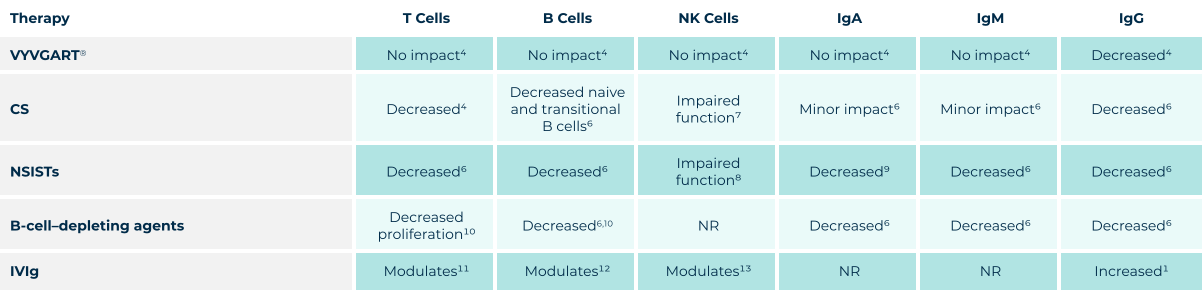
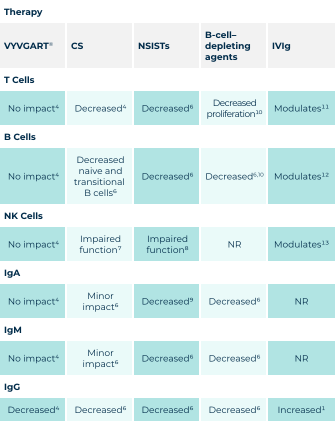
CS=corticosteroid; IgA=immunoglobulin A; IgG=immunoglobulin G; IgM=immunoglobulin M; IVIg=intravenous immunoglobulin; NK=natural killer; NR=not reported; NSIST=nonsteroidal immunosuppressive therapy.
VYVGART®: Demonstrated safety profile2,5
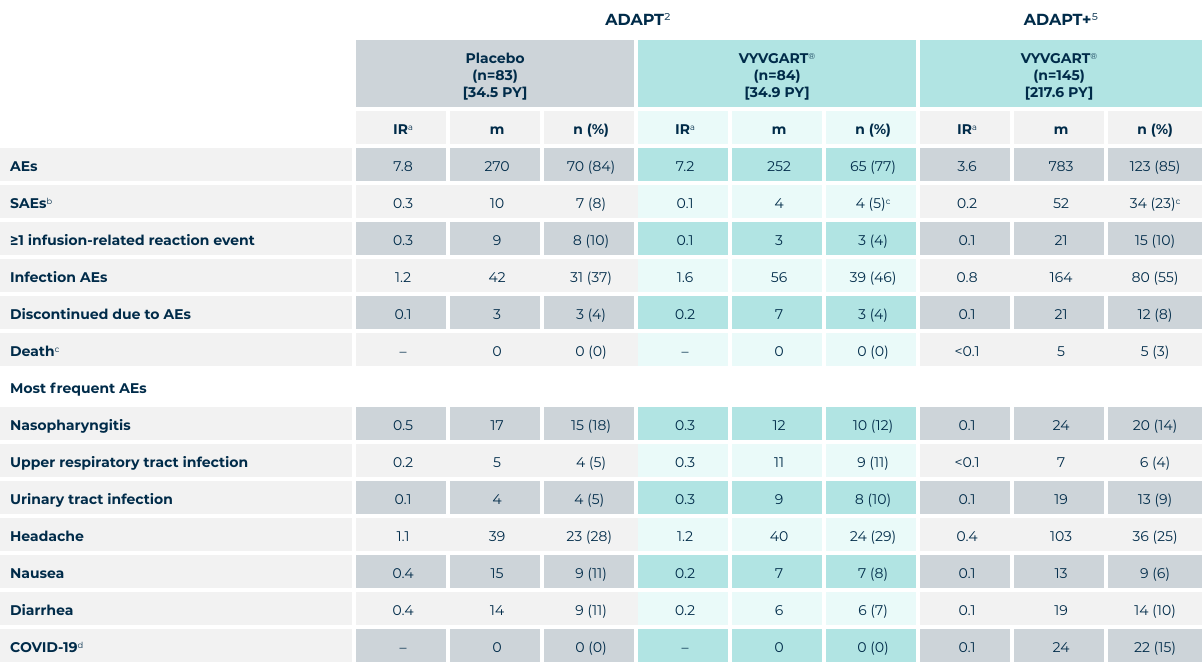
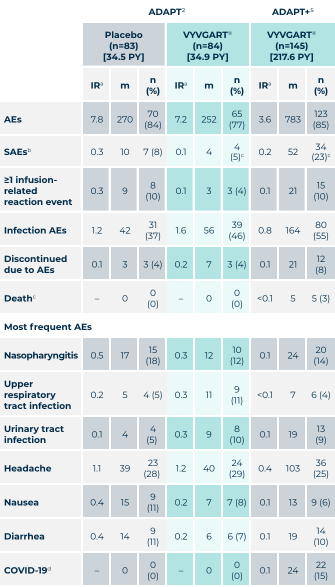
AE=adverse event; IR=incidence rate; m=number of events; PY=patient-year; SAE=serious adverse event.
| a | IR was calculated as number of events per total PYs of follow-up.2,5 |
| b | Serious adverse events in ADAPT+ reported in >1 participant in the total efgartigimod cohort were MG worsening in 7 (4.8%) participants as well as MG crisis, acute respiratory failure, COVID-19, COVID-19 pneumonia, and pneumonia (all in 2 participants [1.4%] each).2,5 |
| c | None of the deaths in ADAPT+ were related to efgartigimod administration per the principal investigator.5 |
| d | Includes all preferred terms of COVID-19, COVID-19 pneumonia, Coronavirus infection, exposure to SARS-COV-2 and SARS-COV-2 test positive.2,5 |
The frequency of reported TEAEs did not increase with subsequent treatment cycles5
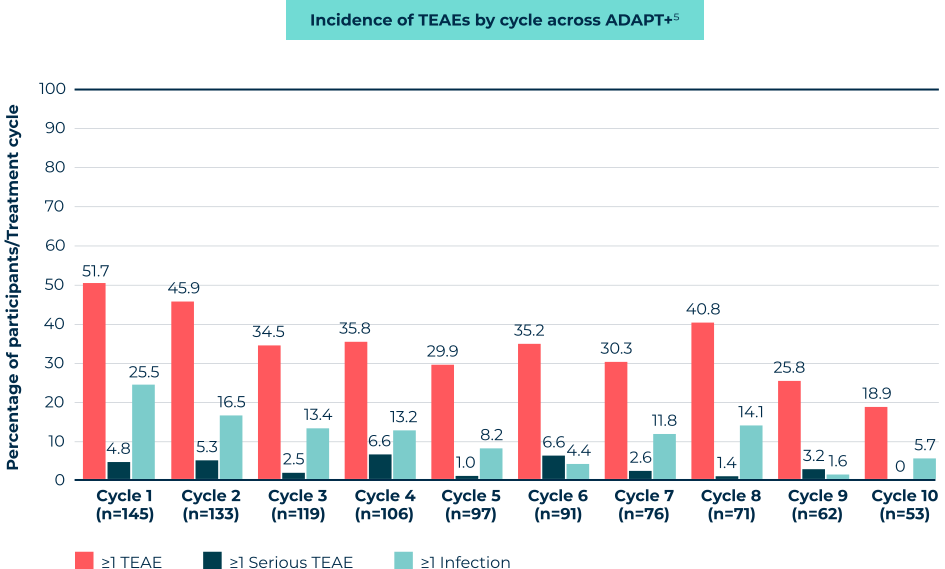
Safety analysis set; up to 3 years on VYVGART® treatment.
- The most common adverse reactions (≥10%) seen in patients who received at least one dose of VYVGART® included headache (reported by 29% of VYVGART®-treated patients and 28% of placebo-treated patients), upper respiratory tract infection (reported by 11% of VYVGART®-treated patients and 5% of placebo-treated patients), and urinary tract infection (reported by 10% of VYVGART®-treated patients and 5% of placebo-treated patients)14
- Most infections and hematology abnormalities were mild to moderate in severity14
- The frequency of reported TEAEs did not increase with subsequent treatment cycles14
TEAE=treatment-emergent adverse event.
References: 1. Ulrichts P, et al. Neonatal Fc receptor antagonist efgartigimod safely and sustainably reduces IgGs in humans. J Clin Invest. 2018;128(10):4372-4386. 2. Howard JF, et al. Safety, efficacy, and tolerability of efgartigimod in patients with generalised myasthenia gravis (ADAPT): a multicentre, randomised, placebo-controlled, phase 3 trial Supplementary Appendix. The Lancet Neurology. 2021;20(7). 3. Ma G, et al. Differential effects of FcRn antagonists on the subcellular trafficking of FcRn and albumin. JCI Insight. 2024;9(10):e176166. 4. Peter HH, et al. Targeting FcRn for immunomodulation: Benefits, risks, and practical considerations. J Allergy Clin Immunol. 2020;146(3):479-491. 5. Howard JF, et al. Long-Term Safety, Tolerability, and Efficacy of Efgartigimod (ADAPT+): Interim Results From a Phase 3 Open-Label Extension Study in Participants With Generalized Myasthenia Gravis. Front Neurol. 2024;14, 1284444. 6. Patel SY, et al. The Expanding Field of Secondary Antibody Deficiency: Causes, Diagnosis, and Management. Front Immunol. 2019;10:33. 7. Vitale C, et al. The corticosteroid-induced inhibitory effect on NK cell function reflects down-regulation and/or dysfunction of triggering receptors involved in natural cytotoxicity. Eur J Immunol. 2004;34(11):3028-3038. 8. Meehan AC, et al. Impact of Commonly Used Transplant Immunosuppressive Drugs on Human NK Cell Function Is Dependent upon Stimulation Condition. PLoS One. 2013;8(3):e60144. 9. Tang S, et al. Mycophenolate mofetil alleviates persistent proteinuria in IgA nephropathy. Kidney Int. 2005;68(2):802-812. 10. Marino M, et al. Rituximab in myasthenia gravis: a “to be or not to be” inhibitor of T cell function. Ann N Y Acad Sci. 2018;1413(1):41-48. 11. Aubin É, et al. Indirect inhibition of in vivo and in vitro T-cell responses by intravenous immunoglobulins due to impaired antigen presentation. Blood. 2010;15.9: 1727-1734. 12. Mitrevski M, et al. Intravenous immunoglobulin and immunomodulation of B-cell – in vitro and in vivo effects. Front Immun. 2015;6:4. 13. McAlpine SM, et al. High Dose Intravenous IgG Therapy Modulates Multiple NK Cell and T Cell Functions in Patients With Immune Dysregulation. Front Immun. 2021;660506. 14. VYVGART® Product Monograph. argenx. July 17, 2025.


