
Dosing
VYVGART® dosing information1
VYVGART®: ongoing treatment with an individualized dosing schedule
- The recommended dose of VYVGART® is 10 mg/kg administered as an IV infusion over one hour once weekly for 4 weeks (one treatment cycle). In patients weighing 120 kg or more, the recommended dose of VYVGART® is 1200 mg (3 vials) per infusion.
- Administer subsequent treatment cycles based on clinical evaluation. The frequency of VYVGART® treatment cycles may vary by patient. The safety of initiating subsequent cycles sooner than 4 weeks from the last infusion of the previous treatment cycle has not been established.
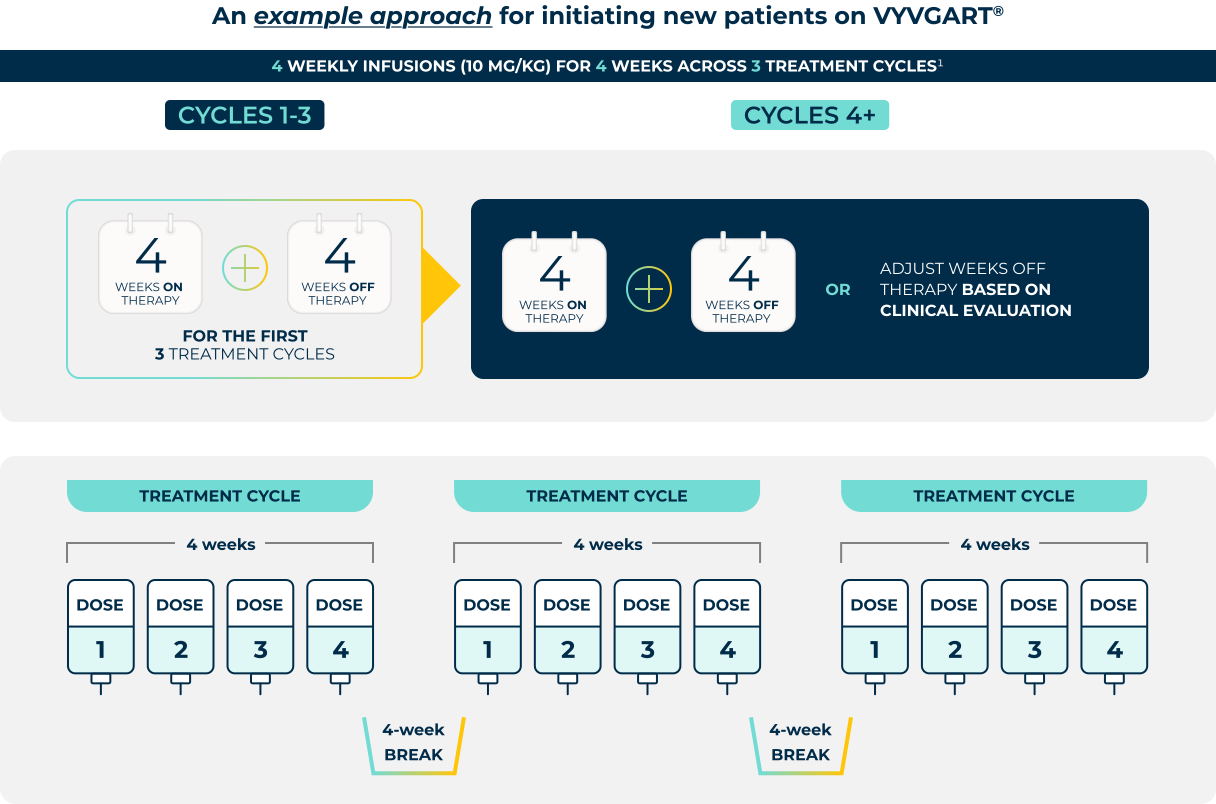
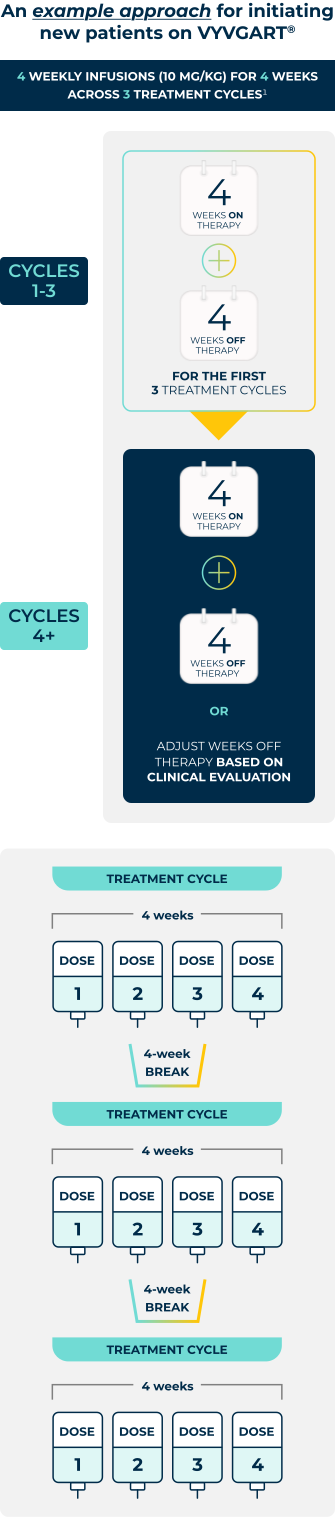
Subsequent treatment cycles1
- Administer subsequent treatment cycles based on clinical evaluation
- The safety of initiating a subsequent treatment cycle sooner than 4 weeks from the last infusion of the previous treatment cycle has not been established
You may find it helpful for your patient to track their gMG symptoms and any adverse reactions during treatment to assist you with determining their next treatment cycle.1

Patients can use the MG-ADL assessment tool to keep track of their symptoms, with coordination and assistance provided by the MyPATH Patient Support Program.
If you wish, the MyPATH Patient Support Program will send you information about your patient's
MG-ADL scores and how they may change over time.
gMG=generalized Myasthenia Gravis; MG-ADL=Myasthenia Gravis Activities of Daily Living.
ADAPT NXT:* An exploratory phase 3B, randomized, open-label parallel-group study in AChRAb+ patients2
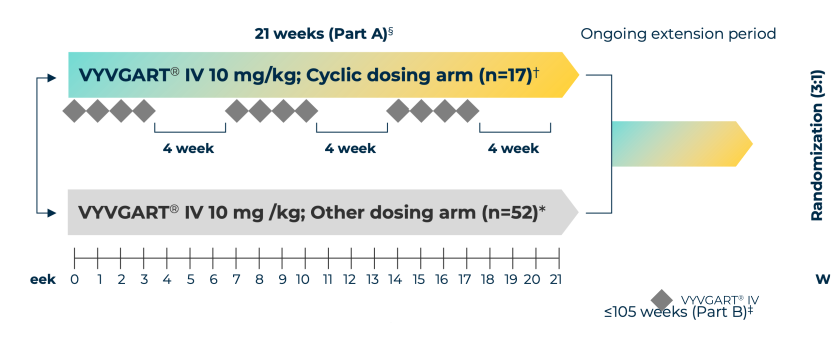
Administration of VYVGART® IV with cyclic dosing schedule:
4 infusions once weekly with 4 weeks OFF therapy over 21 weeks in total
Adapted from Habib AA, et al, 2025.2
Study limitations: Open-label study not powered for statistical hypothesis testing and not placebo-controlled; therefore, data should be interpreted with caution and conclusions cannot be drawn. The cyclic dosing arm is based on limited sample size.
AChEi=acetylcholinesterase inhibitors; AChRAb+=acetylcholine receptor antibody-positive; ANCOVA=analysis of covariance; gMG=generalized Myasthenia Gravis; IV=intravenous; MG-ADL=Myasthenia Gravis Activities of Daily Living; MSE=Minimal Symptom Expression; NSIST=nonsteroidal immunosuppressive therapy.
| * | ADAPT NXT was not designed to investigate non-inferiority and included a second dosing arm that does not comply with the label (therefore, information about the second low dosage arm is not listed). |
| † | Endpoints included: mean of change in average MG-ADL score from Week 1 to Week 21 using an ANCOVA analysis (the ANCOVA model includes the treatment arm as a factor and the baseline MG-ADL total score as covariates); Change from baseline in MG-ADL total score over time and percentage of participants achieving MSE (MG-ADL 0-1) at any time. |
| ‡ | All patients who are listed in Part B have been switched to treatment regimens that do not correspond to the label (off-label). |
| § | All patients received standard gMG treatment (steroids, NSIST and/or AChEi) as a baseline. |
Change from baseline in observed MG-ADL total score (ADAPT NXT, exploratory endpoint)2*
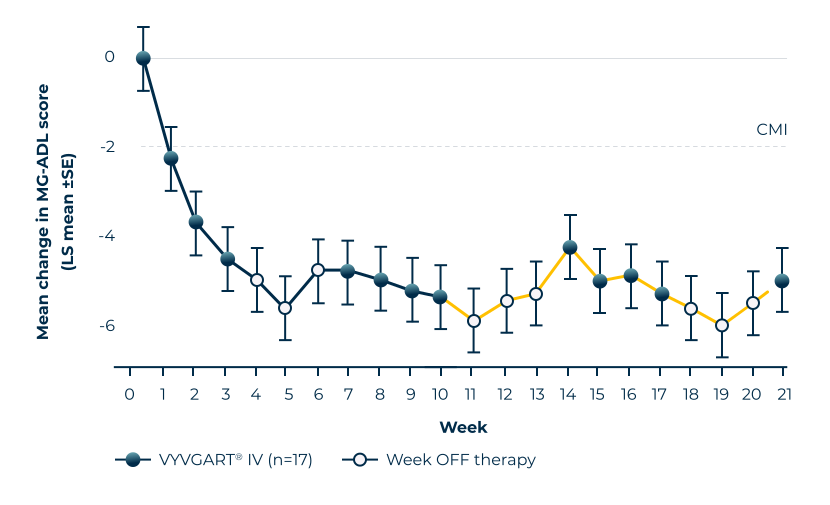
Sustained improvement of MG-ADL score with a cyclic dosing schedule (4 weeks ON therapy with once-weekly infusions and 4 weeks OFF therapy)
47.1% of patients (n=8/17) achieved MSE (MG-ADL 0-1)
Adapted from Habib AA, et al, 2025.2
Study limitations: This prospective study is limited by its small sample size and focus on a single treatment cycle of efgartigimod with a short-term (8-week) follow-up, while the ADAPT study required patients to initiate a second treatment cycle following changes in MG-ADL scores. Therefore, caution should be exercised in interpreting the conclusions.
AChEi=acetylcholinesterase inhibitors; AChRAb+=acetylcholine receptor antibody-positive; ANCOVA=analysis of covariance; gMG=generalized Myasthenia Gravis; IV=intravenous; MG-ADL=Myasthenia Gravis Activities of Daily Living; MSE=Minimal Symptom Expression; NSIST=nonsteroidal immunosuppressive therapy.
| * | Clinical trial data for anti-AChRAb+ patients. Patients were treated with VYVGART® + stable doses of their current gMG treatment. ADAPT NXT was not powered to study noninferiority and included a dosing regimen that is not consistent with the label (as such, information about the second dosing arm has been excluded). Four weeks off started after the last infusion of the most recent cycle. A cycle consists of 4 once-weekly doses over 22 days. |
Immunization considerations during VYVGART® treatment

No specific vaccine is required prior to VYVGART® initiation1
Physicians should evaluate the need to administer age-appropriate vaccines according to immunization guidelines before initiation of VYVGART®.
- Administer all vaccines according to immunization guidelines at least 4 weeks before initiation of treatment with VYVGART®1
- For patients that are being treated with VYVGART®, vaccination with live vaccines is not recommended1
- For all other vaccines, vaccination should take place at least 2 weeks after the last infusion of a treatment cycle and 4 weeks before initiating the next cycle1
Managing infections in patients treated with VYVGART®1

Monitor for clinical signs and symptoms of infections during treatment with VYVGART®.

Delay VYVGART® administration in patients with an active infection until the infection is resolved.
If a serious infection occurs, administer appropriate treatment and consider withholding VYVGART® until the infection has resolved.

- In clinical trials, treatment-emergent infections were reported in 46% (n=39) of patients treated with VYVGART® and 37% (n=31) of patients treated with placebo.
- The most reported infections were upper respiratory tract infections and urinary tract infections.
- The majority of infections were mild to moderate in severity.
Drug-drug interactions with VYVGART®1

VYVGART® may decrease concentrations of compounds that bind to human FcRn, such as:
- Ig products,
- monoclonal antibodies, or
- antibody derivates containing the human Fc domain of IgG.

Patients receiving VYVGART® while concomitantly on treatment with these products should be closely monitored for altered efficacy response to IVIg, SCIg, monoclonal antibodies or antibody derivatives containing the human Fc domain of IgG.

If possible, it is recommended to postpone initiating treatment with these products to two weeks after the last dose of any given treatment cycle of VYVGART®.
Fc=crystallizable fragment; FcRn=neonatal Fc receptor; Ig=immunoglobulin; IgG=immunoglobulin G; IVIg=intravenous immunoglobulin; SCIg=subcutaneous immunoglobulin.
References: 1. VYVGART® Product Monograph. argenx. July 17, 2025. 2. Habib AA, et al. ADAPT NXT: Fixed Cycles or Every-Other-Week IV Efgartigimod in Generalized Myasthenia Gravis. Ann Clin Transl Neurol. 2025;12(6):1162-1170.


