
About gMG
The burden of generalized Myasthenia Gravis (gMG)
gMG symptoms can impact a patient’s ability to complete activities of daily living and their quality of life2,3
- Symptoms of gMG can make socializing difficult and increase feelings of anxiety and isolation1,2
- Body image can be a significant issue for gMG patients who may experience symptoms such as drooping eyelids, masklike expression, and changes related to corticosteroid treatment1,2
According to a recent survey assessing the burden of gMG symptoms:3†

~70%
of patients have difficulty walking up and down stairs and carrying objects

73%
of patients experience significant fatigue

>50%
of patients cannot perform routine daily activities such as cleaning
gMG=generalized Myasthenia Gravis; MG=Myasthenia Gravis.
† This report is based on the analysis of 190 Australian patients with MG undertaken by the Myasthenia Gravis Association of Queensland, Inc. and the University of Queensland.3
Understanding individualized treatment goals for gMG4
MGFA TASK FORCE GOALS
According to the Myasthenia Gravis Foundation of America (MGFA) Task Force: The goal for treatment is a post-intervention Minimal Manifestation Status (MMS) or better, with no more than Grade 1 Common Terminology Criteria for Adverse Events (CTCAE).5

MMS: Patient has no symptoms or functional limitations from gMG but has some weakness on examination of some muscles5

CTCAE Grade 1: Asymptomatic or only mild symptoms from medication (intervention not indicated)5,6
ADDITIONAL TREATMENT GOAL
Minimal Symptom Expression (MSE): Defined as an MG-ADL score of 0 or 1, is a quantitative, patient-reported outcome and may be a useful tool for measuring patient progress after treatment.7
CTCAE=Common Terminology Criteria for Adverse Events; gMG=generalized Myasthenia Gravis; MG-ADL=Myasthenia Gravis Activities of Daily Living; MMS=Minimal Manifestation Status; MSE=Minimal Symptom Expression.
Current therapeutic options target different mechanisms of MG pathophysiology
 AChEi=acetylcholinesterase inhibitor; Fc=fragment crystallizable; IgG=immunoglobulin G; IST=immunosuppressive therapy; mab=monoclonal antibody; MG=Myasthenia Gravis; MMF=mycophenolate mofetil; NMJ=neuromuscular junction; NSIST=non-steroidal immunosuppressive therapy.
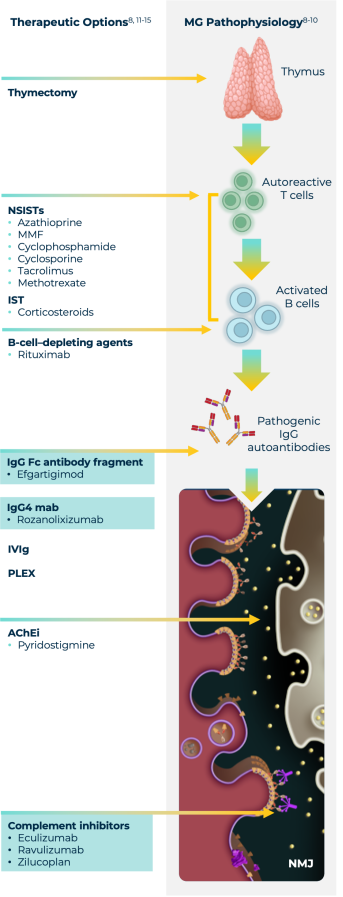 AChEi=acetylcholinesterase inhibitor; Fc=fragment crystallizable; IgG=immunoglobulin G; IST=immunosuppressive therapy; mab=monoclonal antibody; MG=Myasthenia Gravis; MMF=mycophenolate mofetil; NMJ=neuromuscular junction; NSIST=non-steroidal immunosuppressive therapy.
Conventional gMG treatment options
Conventional gMG treatments can be associated with limitations that may even contribute to the burden faced by patients

~1/4 of adults with AChRAb+ gMG have symptoms that persist despite treatment with conventional therapies16†
- Some patients report reduced quality of life despite clinical improvement17‡

A latency period between treatment initiation and therapeutic onset exists for many patients18
- Early gMG therapies such as NSISTs require up to 12-18 months for effect18

Some treatments can be associated with long-term toxicity and comorbidities19,20
- Steroids: weight gain, osteoporosis, diabetes, long-term hepatotoxicity, nephrotoxicity, malignancy, and thrombosis7,8
- Published data on gMG patients treated with oral corticosteroids (n=39) revealed the following frequency of adverse events:**
- 44% weight gain
- 44% pre-diabetes
- 13% osteoporosis
- 5% diabetes
- Published data on gMG patients treated with oral corticosteroids (n=39) revealed the following frequency of adverse events:**
- NSISTs: leukopenia, hepatotoxicity, nephrotoxicity, pancreatitis, cytopenia, pulmonary fibrosis, and hypertension19,20
Patients and physicians have concerns about current gMG management21§
- 84% of gMG patients (n=283) and all sampled physicians (n=45) from a recently published survey raised concerns regarding the long-term side effects of immunosuppressive therapy.
- The majority of both groups also expressed concerns about the potential implications of a dose reduction, including symptomatic relapse, possible hospitalization, and uncertainty about their future health.
In a cross-sectional survey of 100 MG patients, 1/3 were unsatisfied with their current symptom state, despite ongoing treatment with conventional therapy.22¶
AChRAb+=acetylcholine receptor antibody-positive; gMG=generalized Myasthenia Gravis; NSIST=non-steroidal immunosuppressant.
| † | Conventional therapy includes acetylcholinesterase inhibitors, corticosteroids and steroid-sparing long-term immunosuppressants.16 |
| ‡ | Survey results from 78 patients followed for 10 years.17 |
| § | Results were based on a peer-reviewed study. The goal of the survey was to better define patient and physician opinions about gMG long-term immunosuppressant exposure and dose reduction to inform the potential design of a randomized clinical trial.21 |
| ¶ | Treatments included: pyridostigmine only (20%), pyridostigmine + prednisolone (11%), pyridostigmine + immunosuppressant (26%), thymectomy (41%), immunosuppressant only (30%), immunosuppressant + prednisolone (4%), pyridostigmine + prednisolone + immunosuppressant (9%).22 |
| ** | Retrospective analysis conducted to evaluate adverse side effects of corticosteroid treatment in patients with gMG. |
Although IVIg is frequently used to treat gMG, it can be associated with some limitations

IVIg is not approved by Health Canada for the treatment of gMG
- A Cochrane review concluded there is insufficient evidence to determine whether IVIg is effective as a maintenance add-on treatment in chronic gMG23
- Studies have shown no significant difference in QMG change between IVIg and placebo24,25

IVIg can be associated with several side effects for some patients which include: aseptic meningitis, nephrotoxicity, ischemic events, myocardial infarction, fluid overload, leukopenia, thrombocytopenia, thromboembolic event, and stroke risk23

IVIg may face risk of shortages26
- IVIg has been subject to supply issues leading to altered dosing schedules and substitution of alternative therapies26

IVIg can require regular visits to specialized clinics for infusions that take 4-6 hours27
gMG=generalized Myasthenia Gravis; IVIg=intravenous immunoglobulin; QMG=Quantitative Myasthenia Gravis.
gMG assessment tools
What is the MGFA Clinical Classification?
The MGFA Clinical Classification system groups patients with similar clinical features based on the degree of muscle weakness and its impact on daily activities. It is designed to help assess disease severity, determine appropriate treatment strategies, and monitor disease progression.28
MGFA Clinical Classification28

MGFA=Myasthenia Gravis Foundation of America.
What is the Myasthenia Gravis Activities of Daily Living (MG-ADL) Scale?
The MG-ADL is a simple, easy-to-administer profile of functional status for patients with MG. It can serve as a useful measure of MG symptom severity in routine practice. The MG-ADL has demonstrated a high correlation with the objective physician assessment called the Quantitative Myasthenia Gravis (QMG) score.14,29
- Each item is assessed on a 4-point scale, where a score of 0 represents normal function and a score of 3 represents loss of ability to perform that function29
- A total score ranges from 0 to 24, with a higher score indicating more severe impairment18
- Patients should be asked to consider their MG symptoms over the past 7 days29
MG-ADL Assessment Tool

MG-ADL Assessment Tool
©1999 UT Southwestern
Medical Center, Dallas
What is Minimal Symptom Expression (MSE)?
The term MSE is utilized to describe an MG-ADL score of 0 or 1.30,31
If a person living with gMG is able to achieve MSE, it means that they are experiencing minimal to no gMG symptoms, resulting in preserved daily functioning.30,31
gMG=generalized Myasthenia Gravis; MG=Myasthenia Gravis.
What is the Quantitative Myasthenia Gravis (QMG) Scale?
The QMG scale is a 13-item physician-reported grading system that assesses muscle weakness and is based on a physical exam conducted by a neurologist14,29
- Each item is assessed on a 4-point scale, where a score of 0 represents no weakness, and a score of 3 represents severe weakness29
- A total possible score ranges from 0 to 39, with a higher score indicating more severe impairment29

References: 1. Twork S, et al. 2010. Quality of life and life circumstances in German myasthenia gravis patients. Health Qual Life Outcomes: 81-10. 2. Howard JF. MGFA: Myasthenia Gravis A Manual for the Health Care Provider. 2009. 3. Centre for International Economics. The cost to patients and the community of Myasthenia Gravis. Available at: https://www.mgaq.org.au/sites/default/files/2020-02/CIE_Final_Report.pdf. Accessed January 31, 2024. 4. Muppidi S. Outcome Measures in Myasthenia Gravis: Incorporation Into Clinical Practice. J Clin Neuromuscul Dis. 2017;18(3):135-146. 5. Sanders DB, et al. International consensus guidance for management of myasthenia gravis: Executive summary. Neurology. 2016;87(4):419-25. 6. US Department of Health and Human Services. Common Terminology Criteria for Adverse Events (CTCAE) v5.0. Accessed March 20, 2023. https://ctep.cancer.gov/protocolDevelopment/electronic_applications/docs/CTCAE_v5_Quick_Reference_5x7.pdf. 7. Vissing J, et al. 'Minimal symptom expression' in patients with acetylcholine receptor antibody-positive refractory generalized myasthenia gravis treated with eculizumab. J Neurol. 2020;267(7):1991-2001. 8. Mantegazza R, et al. Current and emerging therapies for the treatment of myasthenia gravis. Neuropsychiatric Dis Treat. 2011;7:151-160. 9. Wang S, et al. Advances in autoimmune myasthenia gravis management. Expert Rev Neurother. 2018;18(7):573-588. 10. Fichtner ML, et al. Autoimmune Pathology in Myasthenia Gravis Disease Subtypes Is Governed by Divergent Mechanisms of Immunopathology. Front Immunol. 2020;11:776. 11. Treatment strategy. Myasthenia Gravis Foundation of America. Accessed April 30, 2024. Available at: https://myasthenia.org/Newly-Diagnosed/Treatment-Strategy. 12. Narayanaswami P, et al. Neurology. 2021;96(3):114-122. 13. Vu T, et al. NEJM Evid. 2022;1(5):1-12. 14. VYVGART® Product Monograph. argenx. July 17, 2025. 15. Rozanolixizumab Product Monograph. UCB Canada Inc. April 2025. 16. CADTH Reimbursement Recommendation. Efgartigimod alfa. January 2024; V4(1). Available at: https://www.cda-amc.ca/sites/default/files/DRR/2024/SR0782REC-Vyvgart-meta.pdf. 17. Bozovic I, Ilic Zivojinovic J, Peric S, Kostic M, Ivanovic V, Lavrnic D, Basta I. Long-term outcome in patients with myasthenia gravis: one decade longitudinal study. J Neurol. 2022 Apr;269(4):2039-2045. 18. Menon D, Bril V. Pharmacotherapy of Generalized Myasthenia Gravis with Special Emphasis on Newer Biologicals. Drugs. 2022 Jun;82(8):865-887. 19. Farmakidis C, Pasnoor M, Dimachkie MM, Barohn RJ. Treatment of Myasthenia Gravis. Neurol Clin. 2018 May;36(2):311-337. 20. Gilhus, et al. 2019. Myasthenia gravis. Disease Primers: 5:30. 21. Hehir MK, et al. (2020). Myasthenia gravis patient and physician opinions about immunosuppressant reduction. Muscle Nerve: 61(6), 767-772. 22. Andersen LK, et al. J Neurol. 2022;269:3086-3093. 23. Gajdos P, Chevret S, Toyka KV. Intravenous immunoglobulin for myasthenia gravis. Cochrane Database Syst Rev. 2012 Dec 12;12(12):CD002277. 24. Bril V, et al. Randomized Double-Blind Placebo-Controlled Trial of the Corticosteroid-Sparing Effects of Immunoglobulin in Myasthenia Gravis. Neurology. 2023 Feb 14;100(7):e671-e682. 25. Zinman L, Ng E, Bril V. IV immunoglobulin in patients with myasthenia gravis: a randomized controlled trial. Neurology. 2007 Mar 13;68(11):837-41. 26. National Inventory Shortage Advisory (blood.ca). 27. Canadian Blood Services. Transfusion – Chapter 4: Immunoglobulin Products (2024). 28. Jaretzki A, et al. (2000). Myasthenia gravis, Recommendations for clinical research standards. Neurology: 55(1), 16-23. 29. Wolfe GI, et al. 1999. Myasthenia gravis activities of daily living profile. Neurology; 52(7):1487-1489. 30. Howard JF, et al. 2021. Safety, efficacy, and tolerability of efgartigimod in patients with generalised myasthenia gravis (ADAPT): a multicentre, randomised, placebo-controlled, phase 3 trial Supplementary Appendix. The Lancet Neurology; 20(7). 31. Muppidi S, Silvestri NJ, Tan R, Riggs K, Leighton T, Phillips GA. Utilization of MG-ADL in myasthenia gravis clinical research and care. Muscle Nerve. 2022 Jun;65(6):630-639.


