
VYVGART®: a unique mechanism of action
The first and only IgG Fc-antibody fragment for the treatment of adults with gMG who are anti-AChR antibody positive1†

VYVGART® (efgartigimod alfa) is the Fc fragment of an IgG antibody‡ engineered for high affinity to FcRn1,2
AChR=acetylcholine receptor; Fab=antigen-binding fragment; Fc=crystallizable fragment; FcRn=neonatal Fc receptor; gMG=generalized Myasthenia Gravis; IgG=immunoglobulin G.
† Human IgG-derived.
AChR autoantibodies exert a direct pathogenic effect in gMG3
AChR autoantibodies disrupt neurotransmission in three ways:4

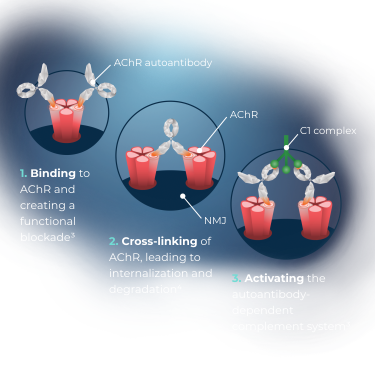
Together, these three mechanisms reduce the function of AChR, decrease the total number of AChRs, and damage the structural integrity of the NMJ.3,4
AChR=acetylcholine receptor; C1=complement component 1; gMG=generalized Myasthenia Gravis; NMJ=neuromuscular junction.
VYVGART® targets the underlying disease biology of gMG2,5
VYVGART® targets FcRn to reduce IgG and AChR autoantibodies2


VYVGART® works upstream to effectively target the underlying gMG disease biology and minimizes off-target effects.2,5
VYVGART® BLOCKS FcRn:
By blocking FcRn, VYVGART® reduces levels of circulating IgG antibodies, including AChR autoantibodies.
REDUCING IgG:
By reducing IgG antibodies, including AChR autoantibodies, VYVGART® targets the key pathogenic driver of gMG.
RESTORING FUNCTION:
Lower levels of AChR autoantibodies result in less damage and dysfunction at the NMJ.
AChR=acetylcholine receptor; FcRn=neonatal Fc receptor; gMG=generalized Myasthenia Gravis; IgG=immunoglobulin G; NMJ=neuromuscular junction.
References: 1. VYVGART® Product Monograph. argenx. July 17, 2025. 2. Howard JF, et al. 2021. Safety, efficacy, and tolerability of efgartigimod in patients with generalised myasthenia gravis (ADAPT): a multicentre, randomised, placebo-controlled, phase 3 trial Supplementary Appendix. The Lancet Neurology; 20(7). 3. Gilhus, et al. 2016. Myasthenia gravis — autoantibody characteristics and their implications for therapy. Neurology; 12. 4. Huijbers MG, et al. 2014. Pathogenic immune mechanisms at the neuromuscular synapse: the role of specific antibody‐binding epitopes in myasthenia gravis. J Intern Med; 275(1), 12-26. 5. Roopenian DC. & Akilesh S. 2007. FcRn: the neonatal Fc receptor comes of age. Nat Rev Immunol; 7(9), 715-725.


